⚠️ Plants cannot ship to CA, FL, HI, or US territories


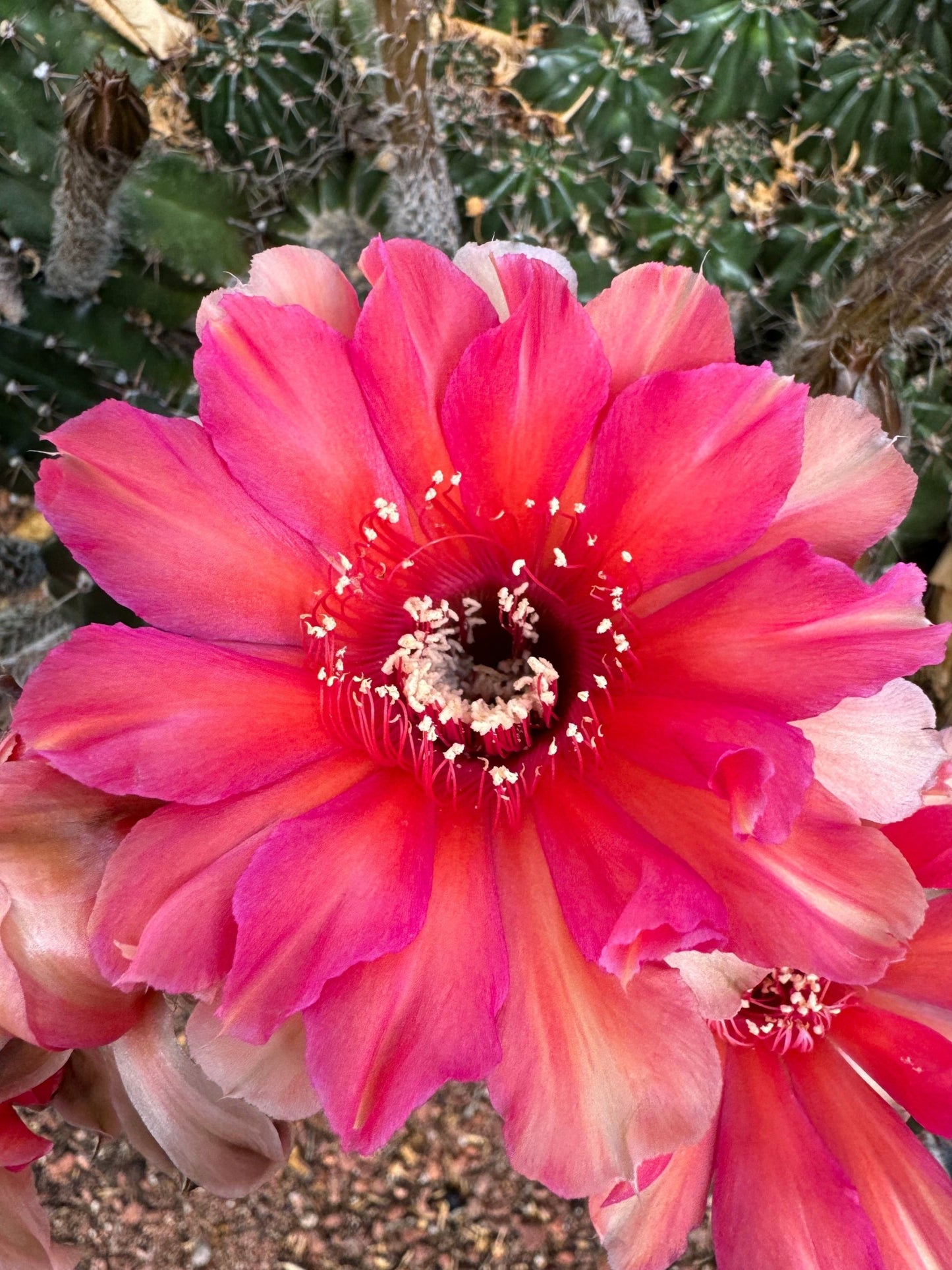
Echinopsis hybrid, pink-red bloom
Echinopsis hybrid, pink-red bloom
Couldn't load pickup availability
Family Cactaceae
Subfamily Cactoideae
Tribe Cereeae
Subtribe Trichocereinae
Genus Echinopsis?
Species x
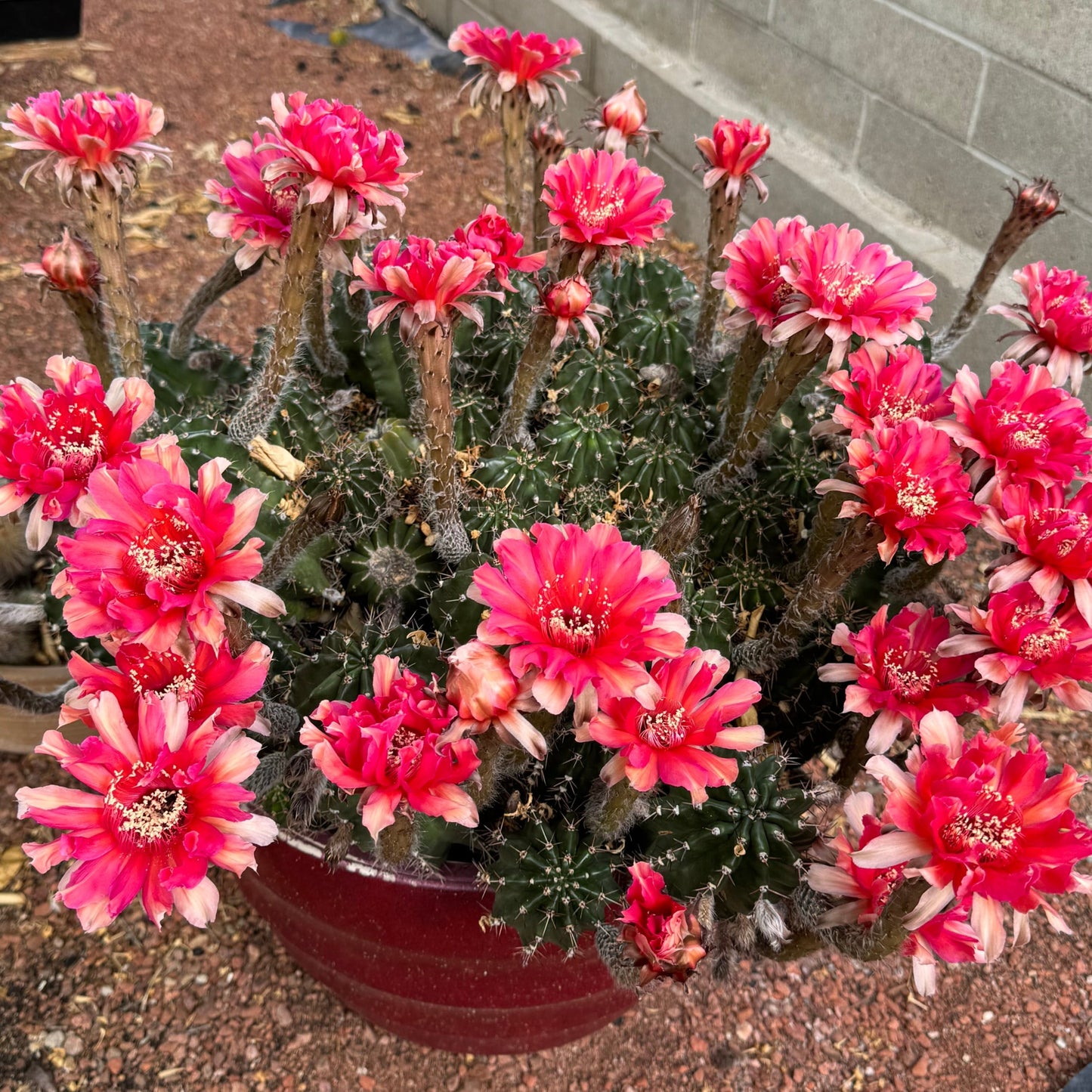
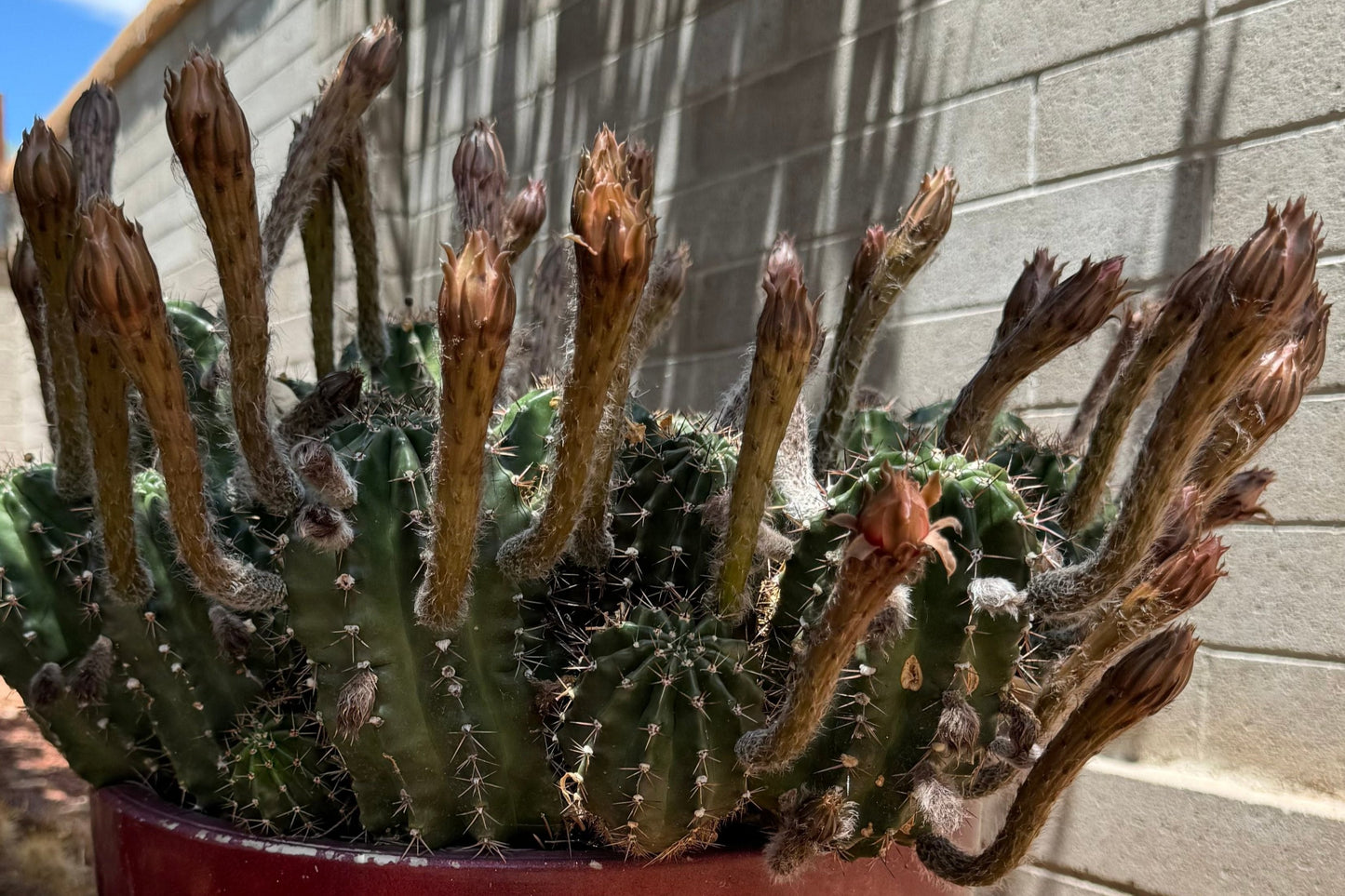
I picked up this cactus from a local Cactus & Succulent Society sale as an unknown variety, half covered with pine-needles and nuggets of desiccated bird poop. I cleaned it up, started caring for it, and got one flower the first year. The second year, I got thirty (I think it's happy?).
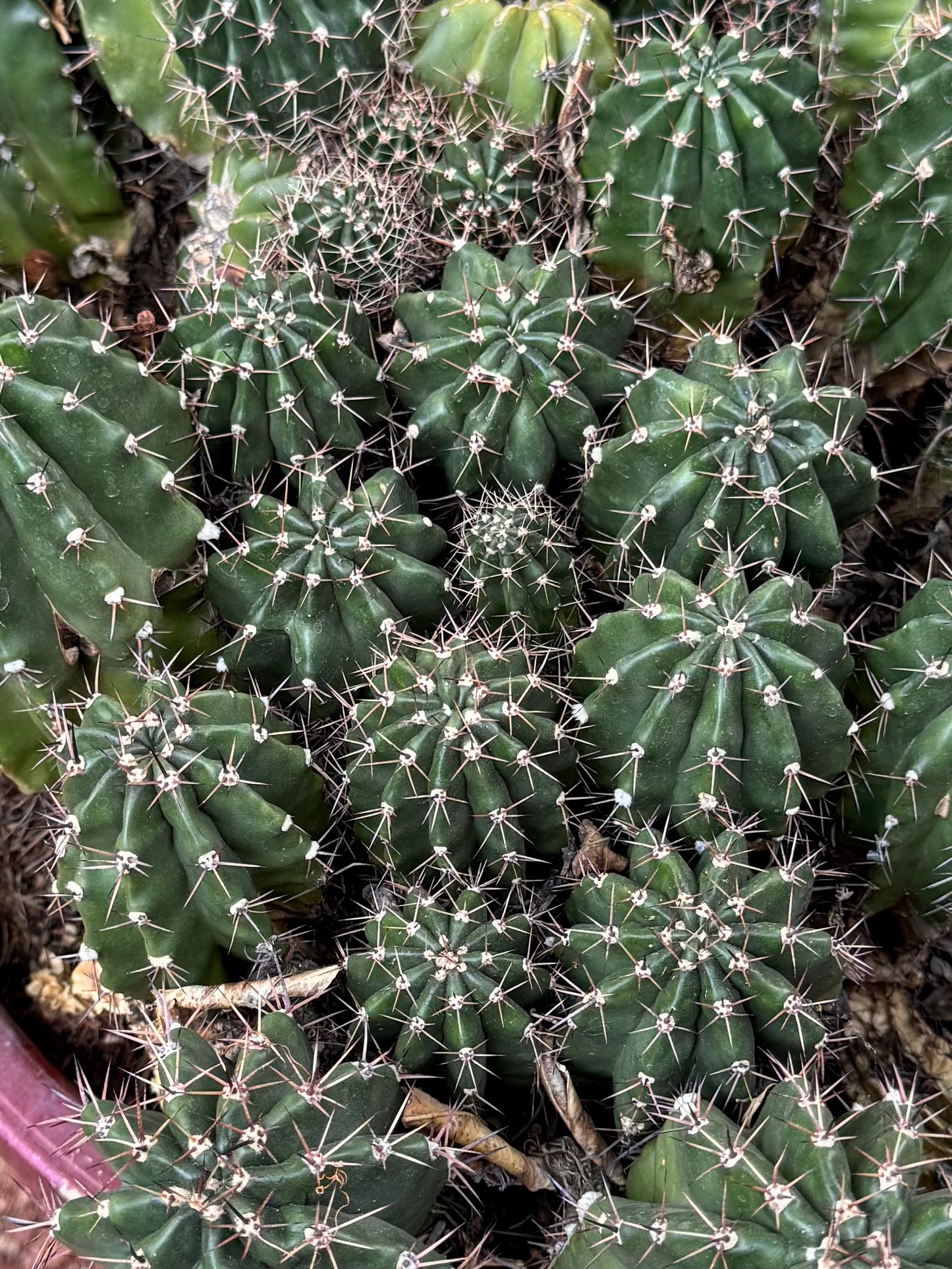
Best I can tell, it is an Echinopsis hybrid—if you recognize it give a shout! It looks similar to the cultivar "Temptress" with dark green stems and a pink-red bloom. The flowers have intriguing coloration, saturated in the center petals and then fading in a gradient to a desaturated red color on the outer petals. Petals are rounded with slightly wavy edges.
Like other Echinopsis hybrids the cactus has been a fast grower and quite hardy. It has been happy to overwinter outdoors, though Tucson isn't the best place to test the lower limits on things; I assume it wouldn't appreciate a hard freeze.
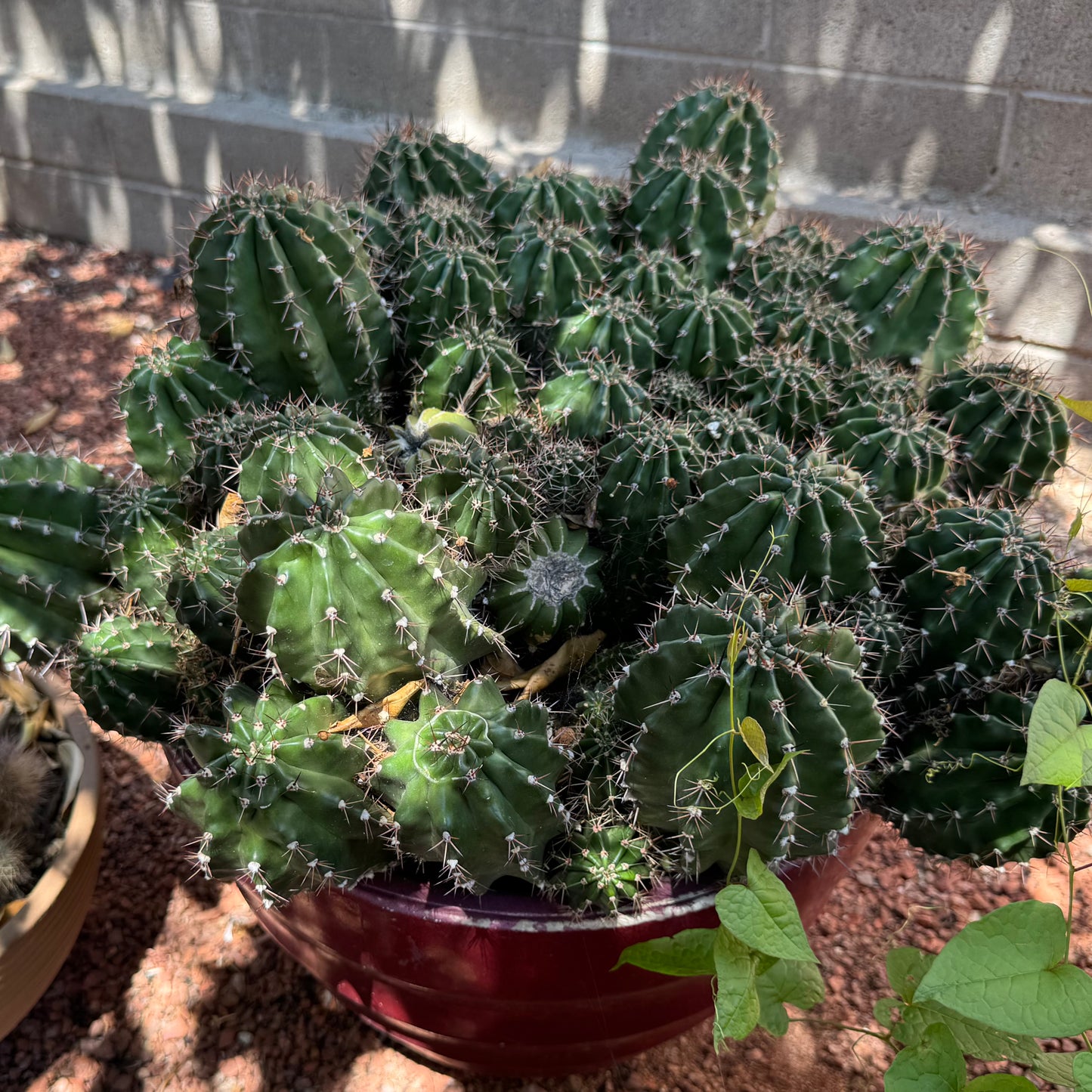
Options: You will receive a pup from the "parent" plant pictured. Pups are rooted with a diameter varying from 1" (small) up to 3–4" (large).
Note that pups can be lopsided from squeezing between larger stems, but this seems to even out fairly quickly as the cactus matures. Secondary pups will begin to develop more rapidly once the plant has been established for a while, with fastest growth in the spring and fall growing seasons.
| Growth habit | Mounding cactus surrounded by pups |
| Size | Mound can reach several feet in diameter and height given time; mature stems reach about 4 inches in diameter. |
| Light | Filtered sun, under a tree or shade cloth, or bright indirect light |
| Water | Regular water in spring-summer growing season, allow to dry between waterings; leave dry over winter |
| Overwintering | Hardy to 20°, tolerant of light freezes. No need to overwinter in greenhouse in warmer climates, as a warmer winter will discourage blooms |
| Flowers | Blooms sporadically, usually once a year in the spring, sometimes with a second fall bloom |
| Native to | Cultivar (likely South America) |
| Conservation risk status |
n/a |