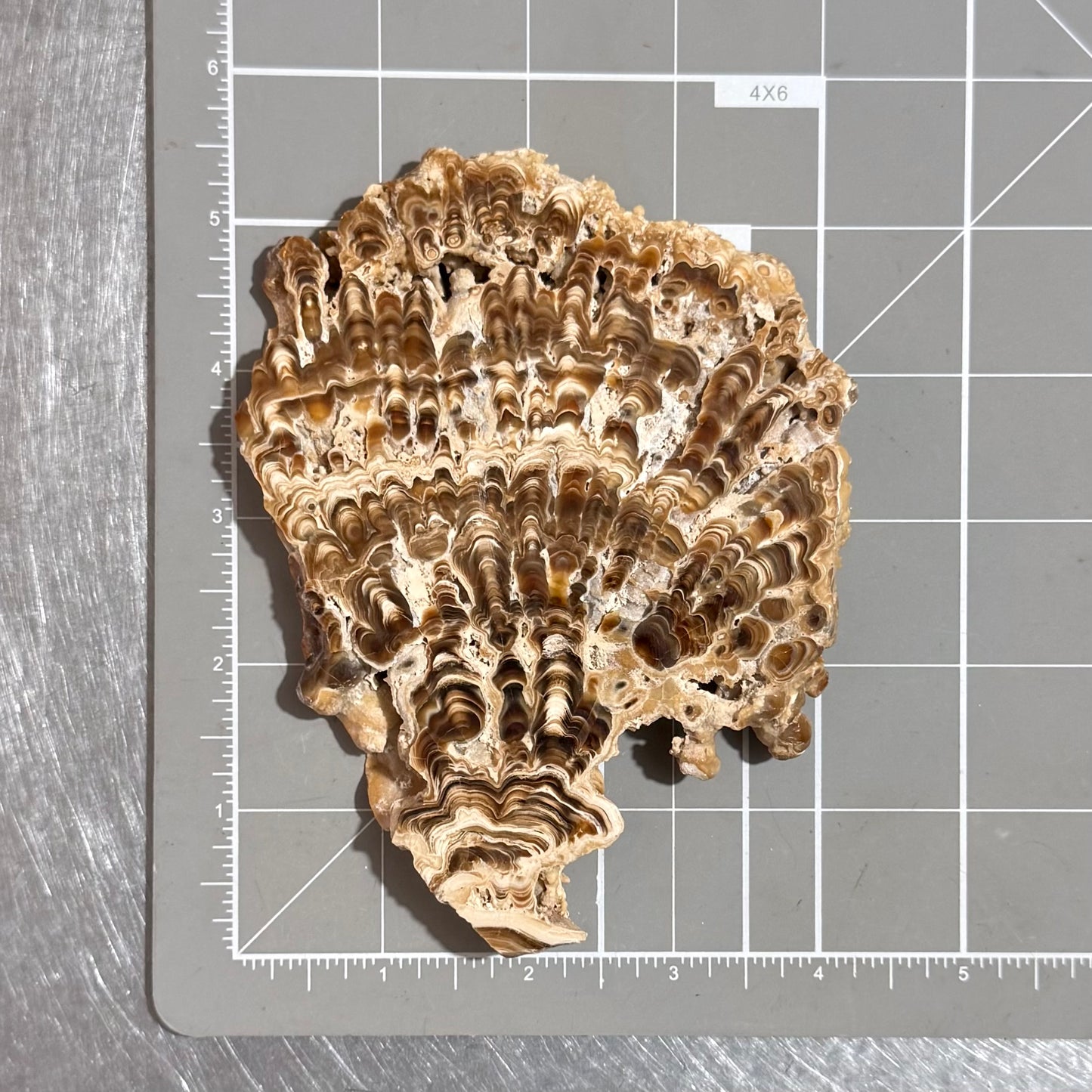


Aragonite cave formation, polished slice (large)
Aragonite cave formation, polished slice (large)
Couldn't load pickup availability
Locale: High Atlas Mountains, Morocco
Approx size: 5 x 4 x 0.5"
Approx weight: 270g (half pound)
This polished slice of aragonite is a cross-sections of a cave formation from the High Atlas Mountains of Morocco. Before slicing, the original specimen is a common type of cave formation (speleothem) called a coralloid, colloquially known as “cave popcorn.” This is due to their knobby rounded growth form, ranging from cauliflower to globular to mammillary shapes. These cave growth forms are preserved on the edges of the piece.
Speleothems like cave popcorn are typically composed of calcium carbonate (CaCO3), and created through the deposition of minerals as fluids seep into the cave, creating bands of color as the solution composition wavers over time. The polished surface reveals this layering; the interior has good translucency and agate-like banding.
Calcite and aragonite are both composed of calcium carbonate (meaning they are polymorphs of one another) and the two minerals commonly co-mingle in cave environments. To paraphrase the National Speleological Society, the ratio of magnesium-to-calcium determines whether the calcium carbonate crystallizes as calcite or aragonite, as higher concentrations of magnesium inhibit the growth of calcite. While these specimens are primarily aragonite, scientific studies have found similar speleothems are more complex with alternating layers of calcite and aragonite. Molasses-brown banding is caused by other trace minerals like siderite—or even mud and silt that becomes entrapped in the layers.
UV REACTIVITY as an aragonite-based mineral, this material has very good phosphorescence. The aragonite fluoresces whitish under 365nm UV light and is not the most impressive, but “charging” for several seconds with a strong UV light (LED needs a filter) will cause green phosphorescence that lingers for several seconds as shown in the video.